

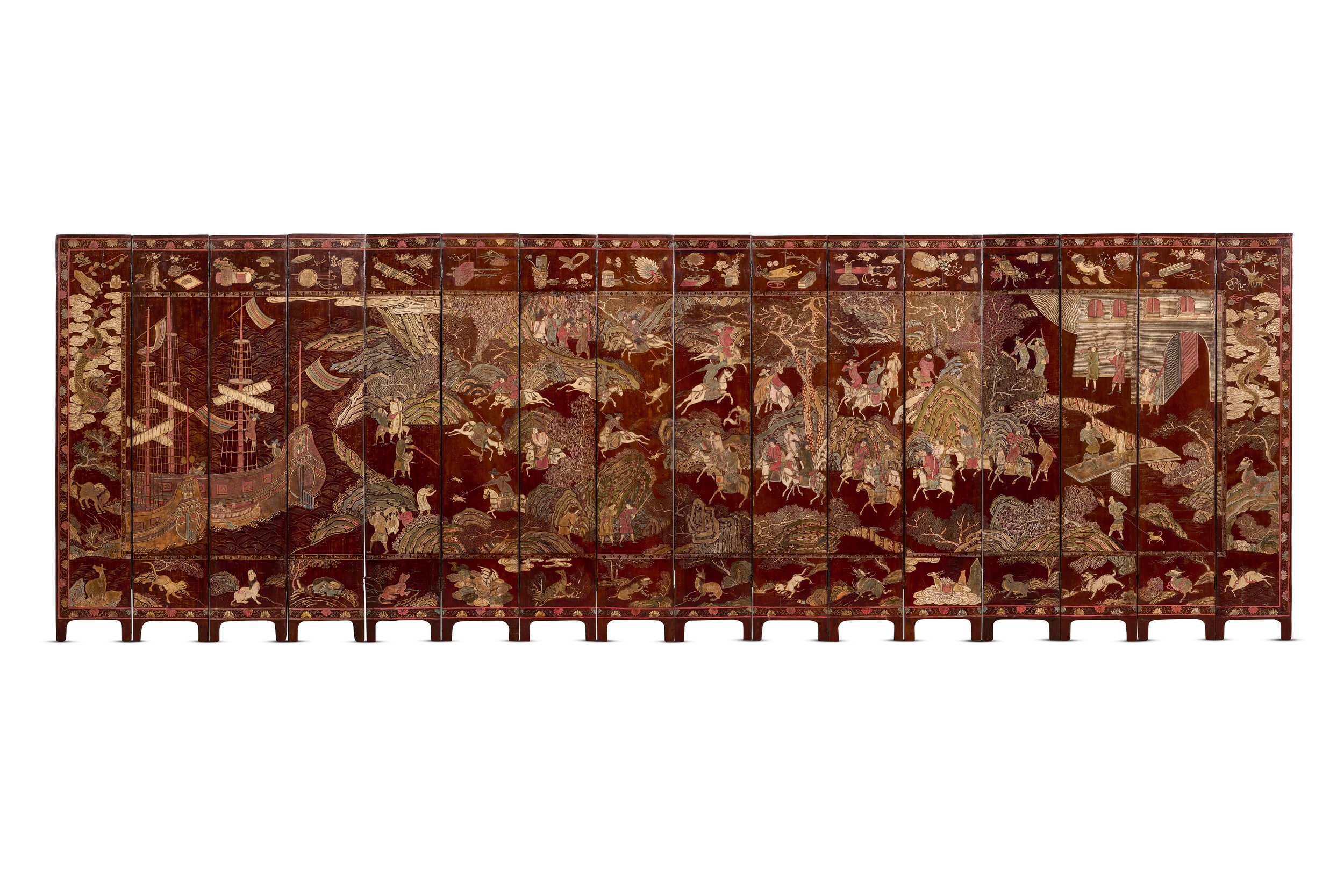
Sixteen-Panel Screen
China - Wood, lacquer, pigments and gold; metal mounts
Qing dynasty, Kangxi period (1662–1722)
H. 117 cm L. 354 cm (open plan)
Ref. 16401
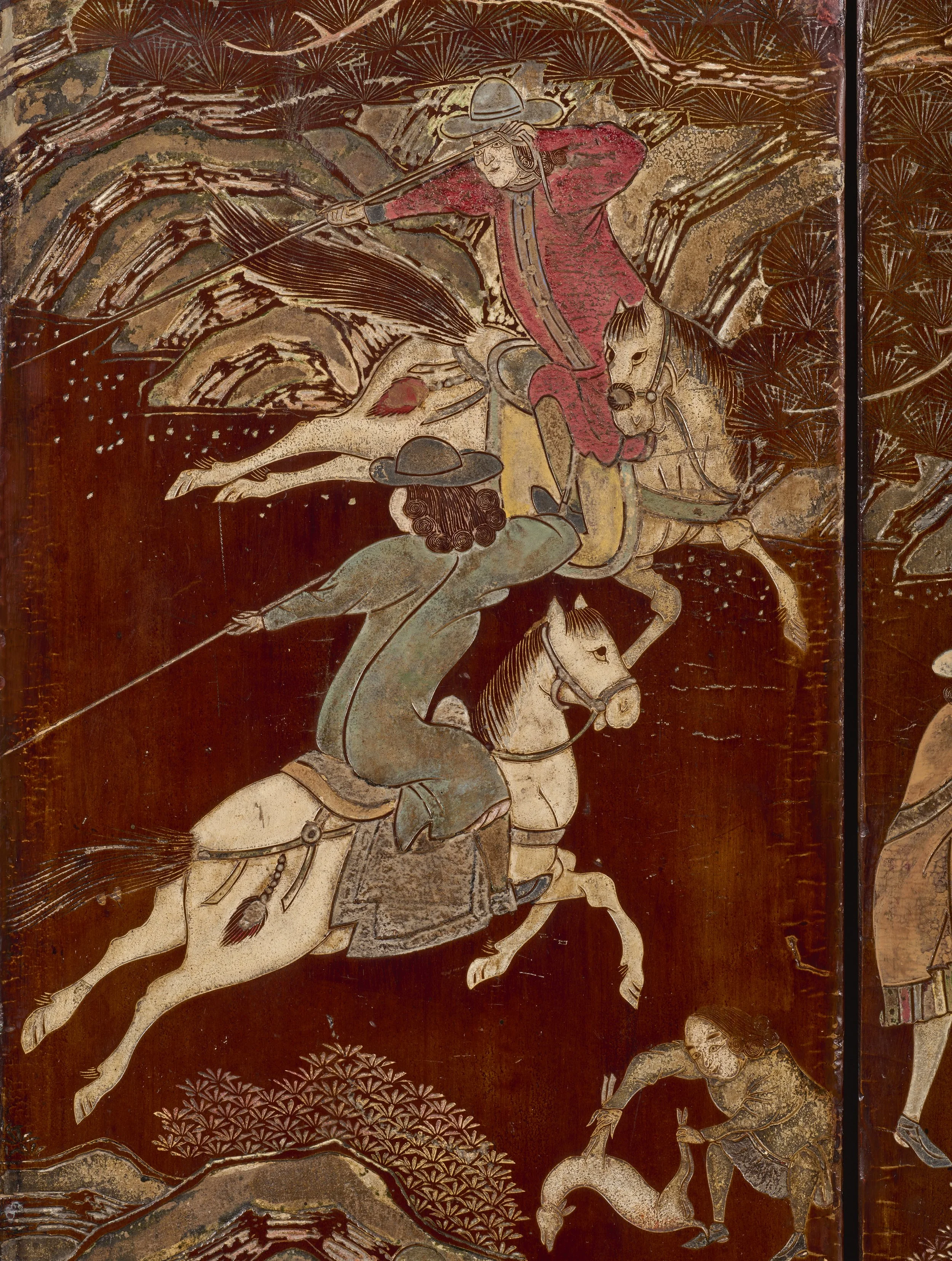
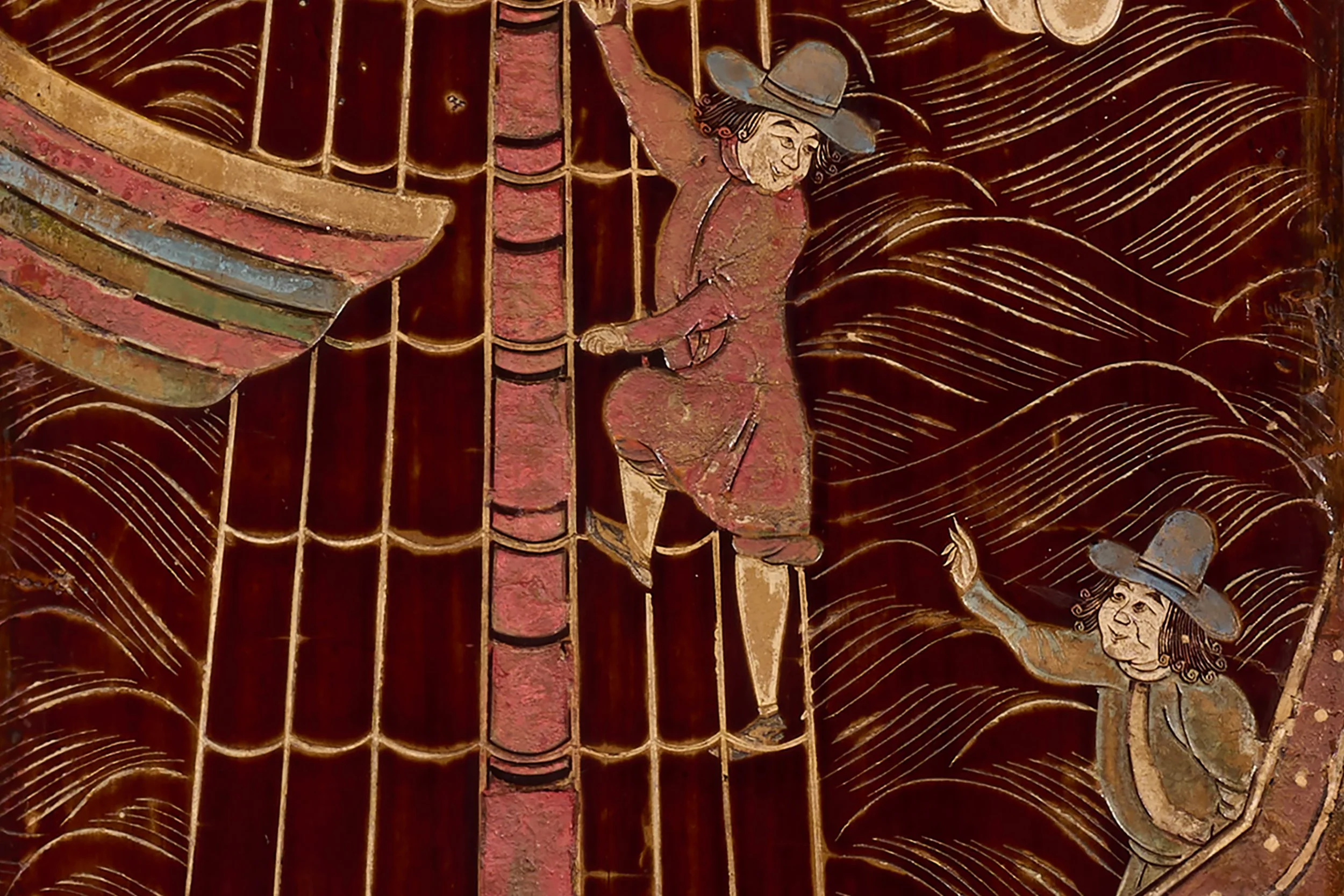
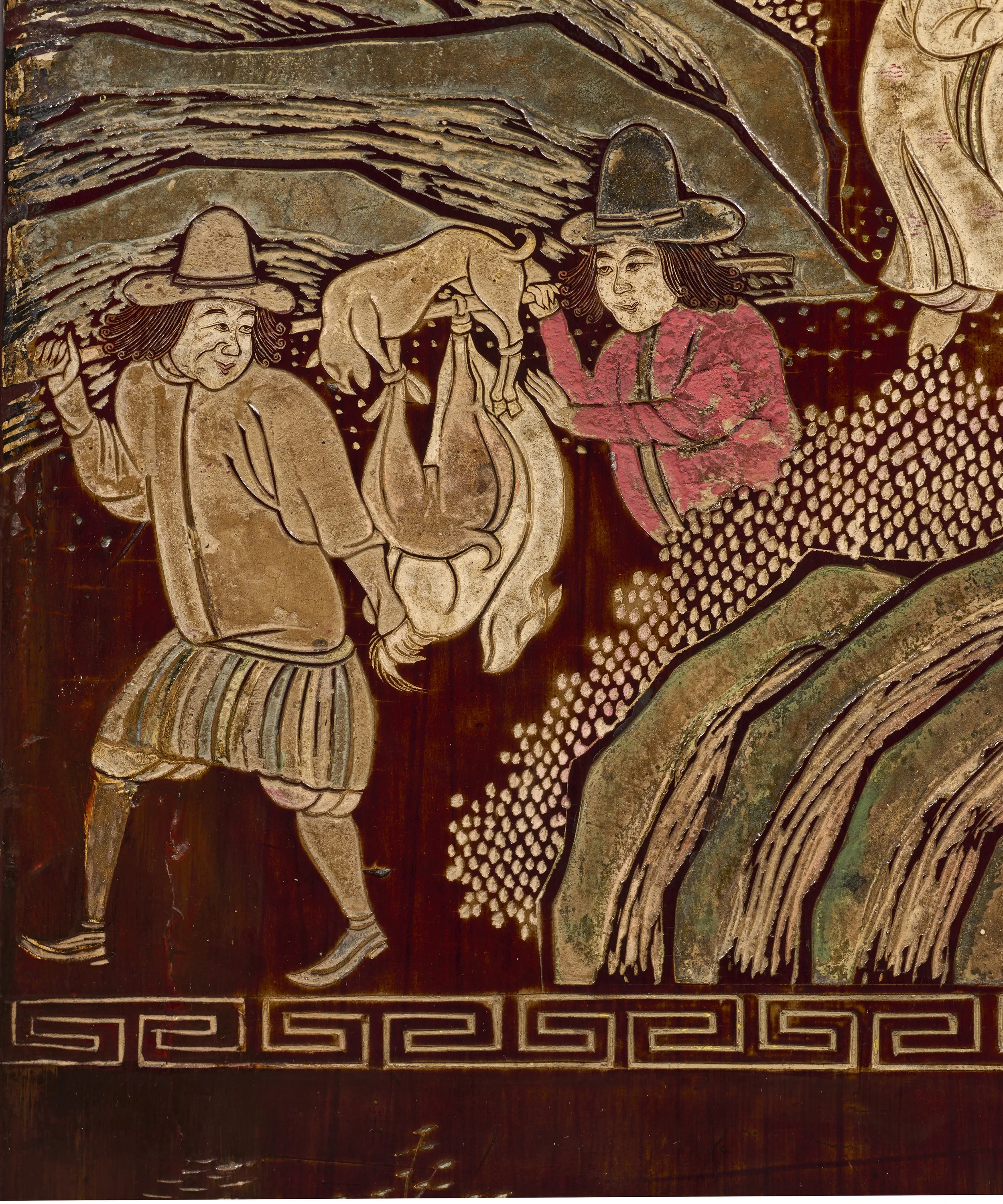

This sixteen-panel Kuancai lacquer screen is notable for its rare format and unusual European hunting theme. One side presents an expansive narrative scene, while the reverse is finished in plain lacquer. The composition begins with Western sailing ships on rolling waves across the left panels and extends into a broad landscape dominated by a dynamic hunting scene. European figures pursue and capture prey using both traditional Chinese weapons and firearms amid rocks, pines, and clouds. In total, 57 figures and 14 animals animate the scene, which progresses visually from land toward sea, with a fortress and pontoon bridge in the distance.
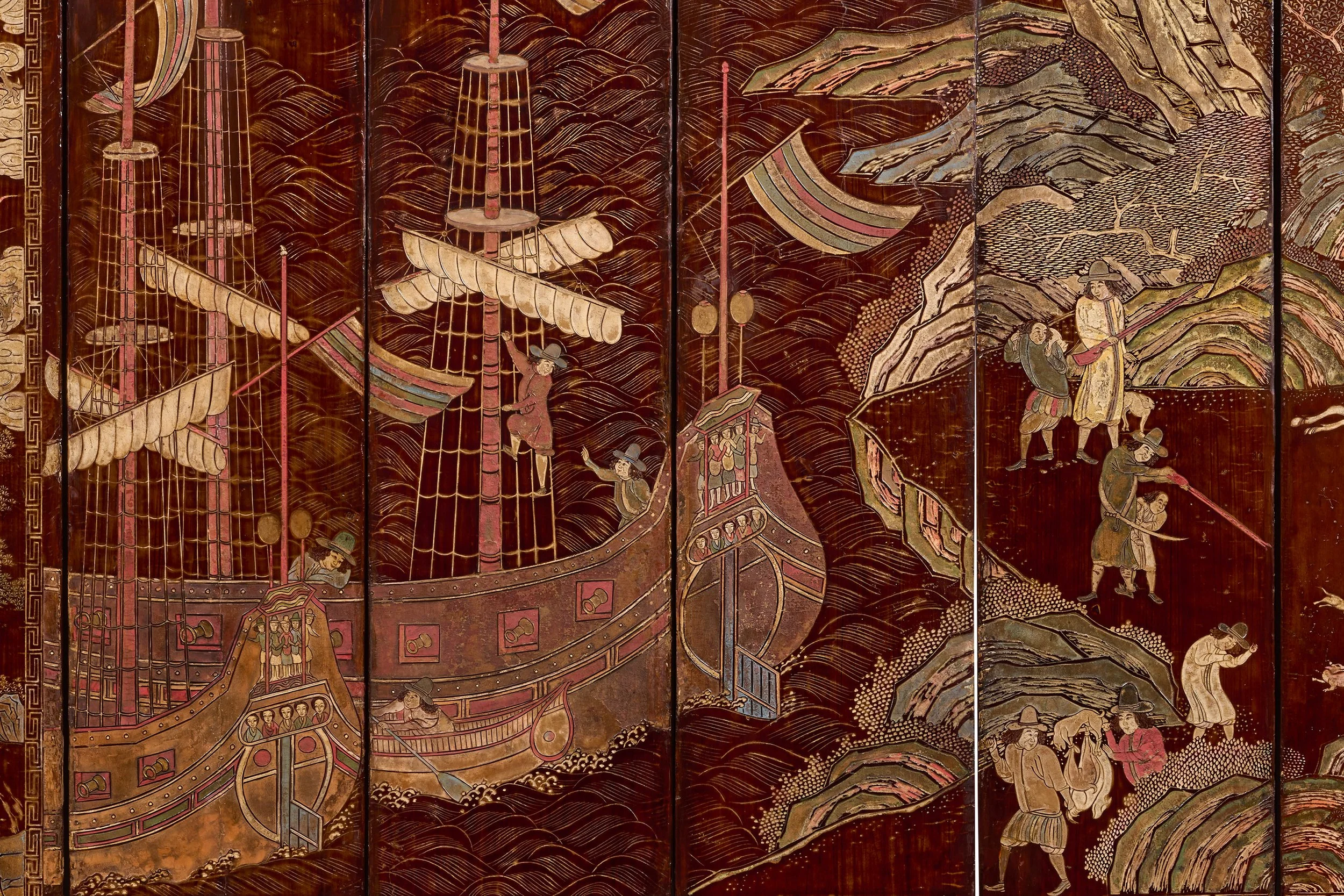

The imagery of European figures, ships, muskets and coastal settings on the central panel closely recalls Japanese Nanban screens (Nanban byōbu, c. 1590–1650), and this association has become the prevailing scholarly interpretation of such Kuancai screens. Nevertheless, alternative perspectives have been proposed. Recent research traces the European hunting scene to indigenous Chinese sources, including Southern Song hunting paintings, representations of Wenji’s story, Japanese Tartar screens, imagery of Zhong Kui’s processions, and Qing dynasty hunting scenes. The motif of Western hunters positioned between land and sea also appears on porcelain, indicating its circulation across different media. The production of these screens likely relied upon a shared pictorial vocabulary common to Ming and Qing professional painters, printmakers and porcelain decorators. Despite the presence of maritime imagery, the scenes are essentially military rather than commercial in character.
Provenance:
Anne Duchange Collection
Nicole Brugier Collection
The screen is published in Asian Lacquer: A Lasting Story of Fascination and Inspiration, 2025, pp. 230-239, no. 22.
Catalogue available for purchase at the galleries and at the TEFAF stand.
To purchase online, please fill in our contact form or email books@jorgewelsh.com