

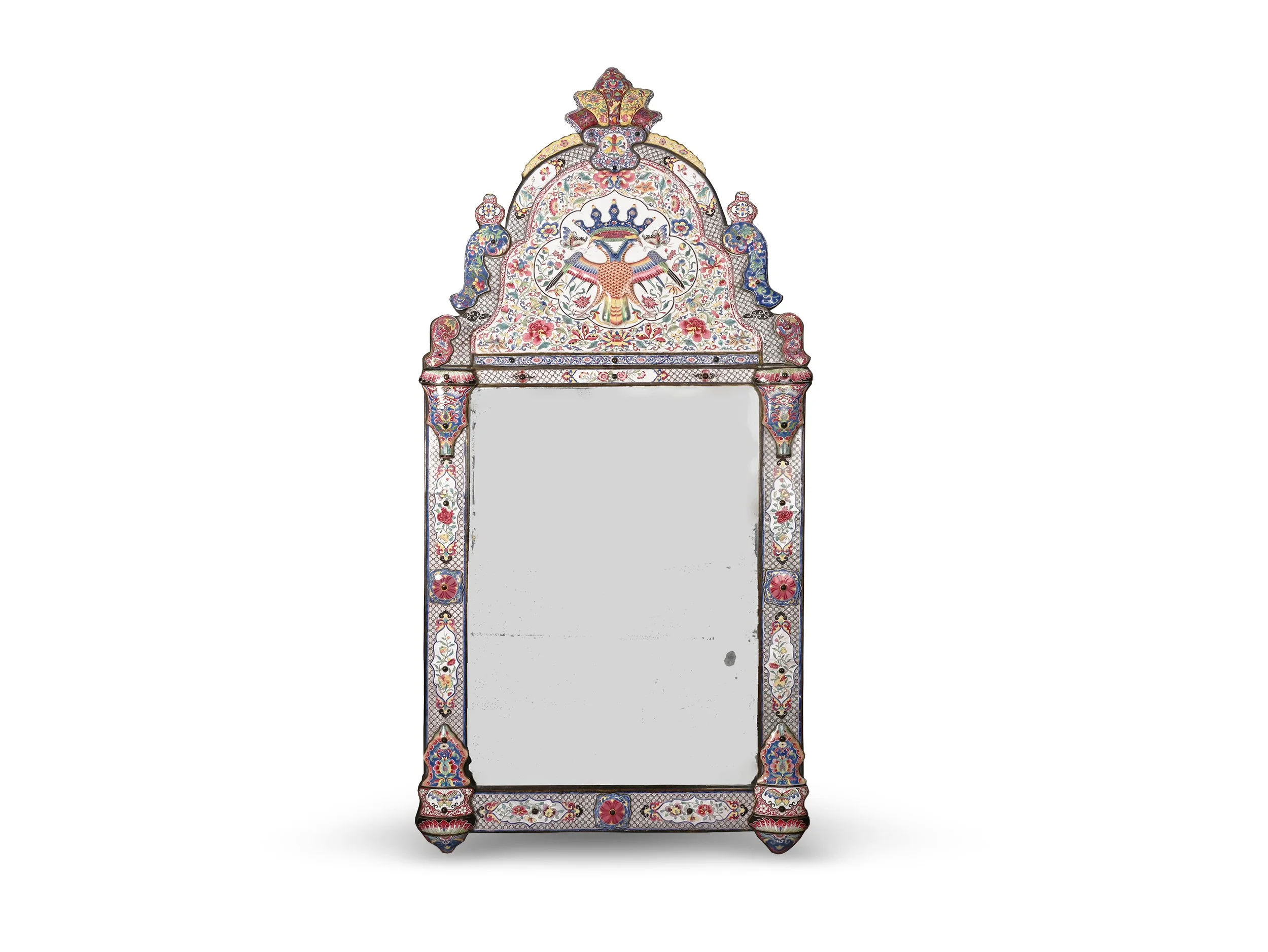
A rectangular wall mirror with repoussé decoration and applied sections, mounted on a wooden backing. The mirrored plate is framed by rectangular plaques along the sides and base, while the scalloped pediment is surmounted by a stylised feather-plume finial. The surface is decorated with famille rose enamels on a white ground. The pediment features a crowned double-headed eagle flanked by butterflies, positioned above sprays of flowers within a lobed cartouche reserved against a densely ornamented floral ground with lotus and peony scrolls. The frame along the base, sides and pediment is decorated with rectangular medallions containing floral motifs, reserved from a continuous trellis pattern and geometric borders. The applied corner mounts are decorated with ruyi-head motifs and foliate scrollwork.
The two-headed eagle featured in this example has been used throughout history in several parts of the world and, from the sixteenth century onwards, became a common motif in Asian objects produced for export. Debate continues regarding who commissioned these objects over the centuries and why this motif was used in Asian works. Recent research suggests that the two-headed eagle without additional symbols (with the exception of the crown) may be interpreted as a symbol of Christianity as a whole, an attribute adopted during the Baroque period by various religious orders, which stripped the eagle of its political elements (the sword, the globe, vases, coats of arms, and others). This theory explains the large number of commissions featuring the double-headed eagle, used as an ornamental element in architectural works and as an elegant motif in decorative arts intended for both religious and secular audiences, thereby signalling a universal ecclesiastical discourse. Nevertheless, the motif of the crowned double-headed eagle suggests a commission of considerable prestige.
This mirror represents an exceptional example of Chinese enamel on copper produced for the European market. Mirrors were manufactured in China after European prototypes in metal or faïence. In 1738 and 1741, the Danish supercargo Christen Jensen Lintrup (1704–1772) placed comparatively large private orders for painted enamels on copper while trading in Canton. Among the items commissioned was a pair of mirrors ordered by Lintrup in the spring of 1741. In 1742, he transported them to Copenhagen aboard the ship Dronningen af Danmark. The two mirrors subsequently remained within the Lintrup family. Today, one is held in the David Collection, while the other is in the collection of Designmuseum Danmark.
Provenance
Architect João Teixeira Collection
Wall Mirror
Copper decorated with famille rose enamels; mirrored glass and wooden support
China – Qing dynasty, Qianlong period (1736-1795)
H. 135 cm L. 65 cm
Ref. 16903