

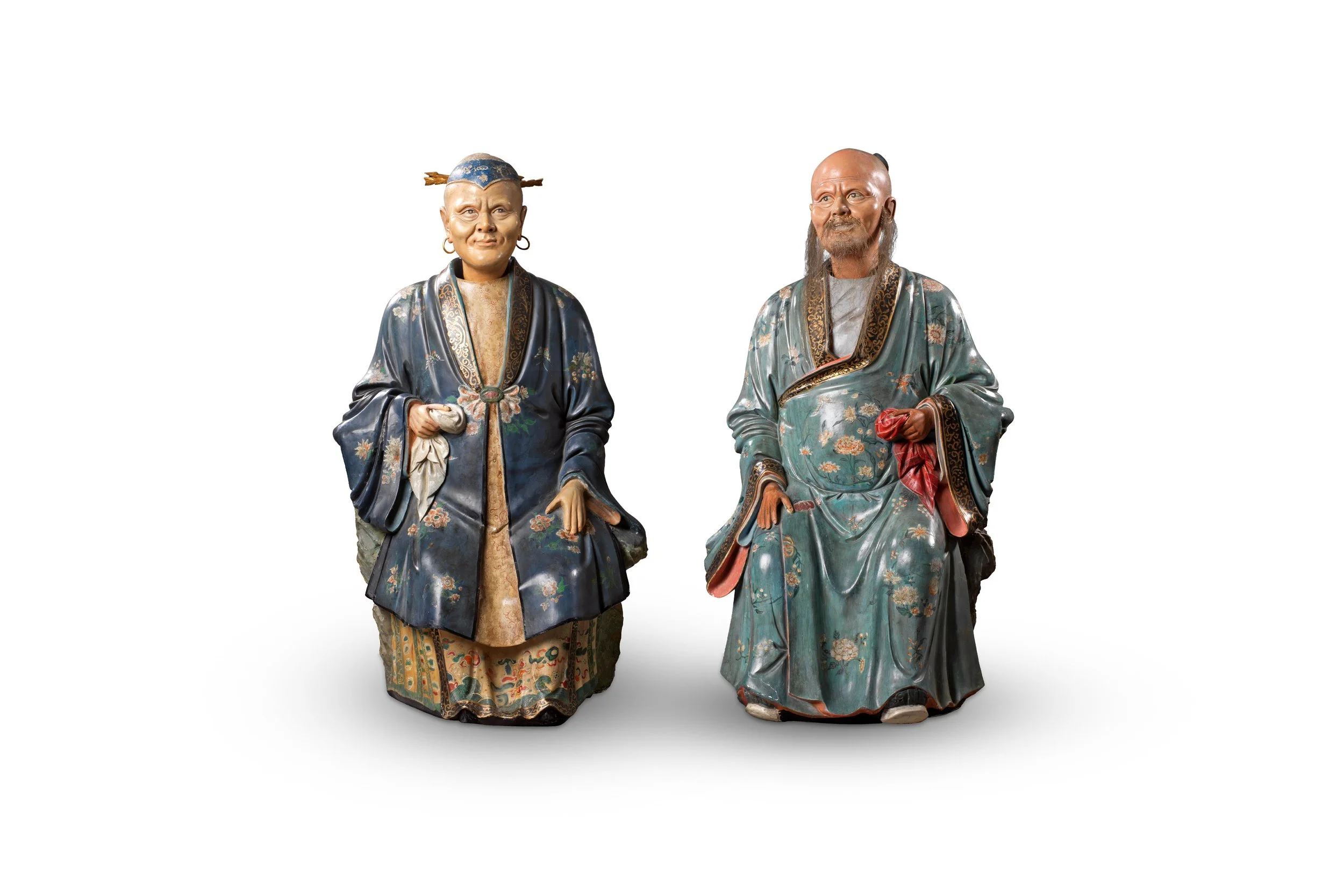
-
Unfired clay painted with polychrome enamels
China - Qing dynasty, Qianlong period (1736-1795)
Male H. 58 cm L. 31 cm W. 21 cm
Female H. 58 cm L. 29 cm W. 21 cm
Provenance:
Inherited in the family company J. Ringborg AB, a shipping and trading firm founded by Jöns Ringborg (1768-1842) in the 1790s.Ref. 10542
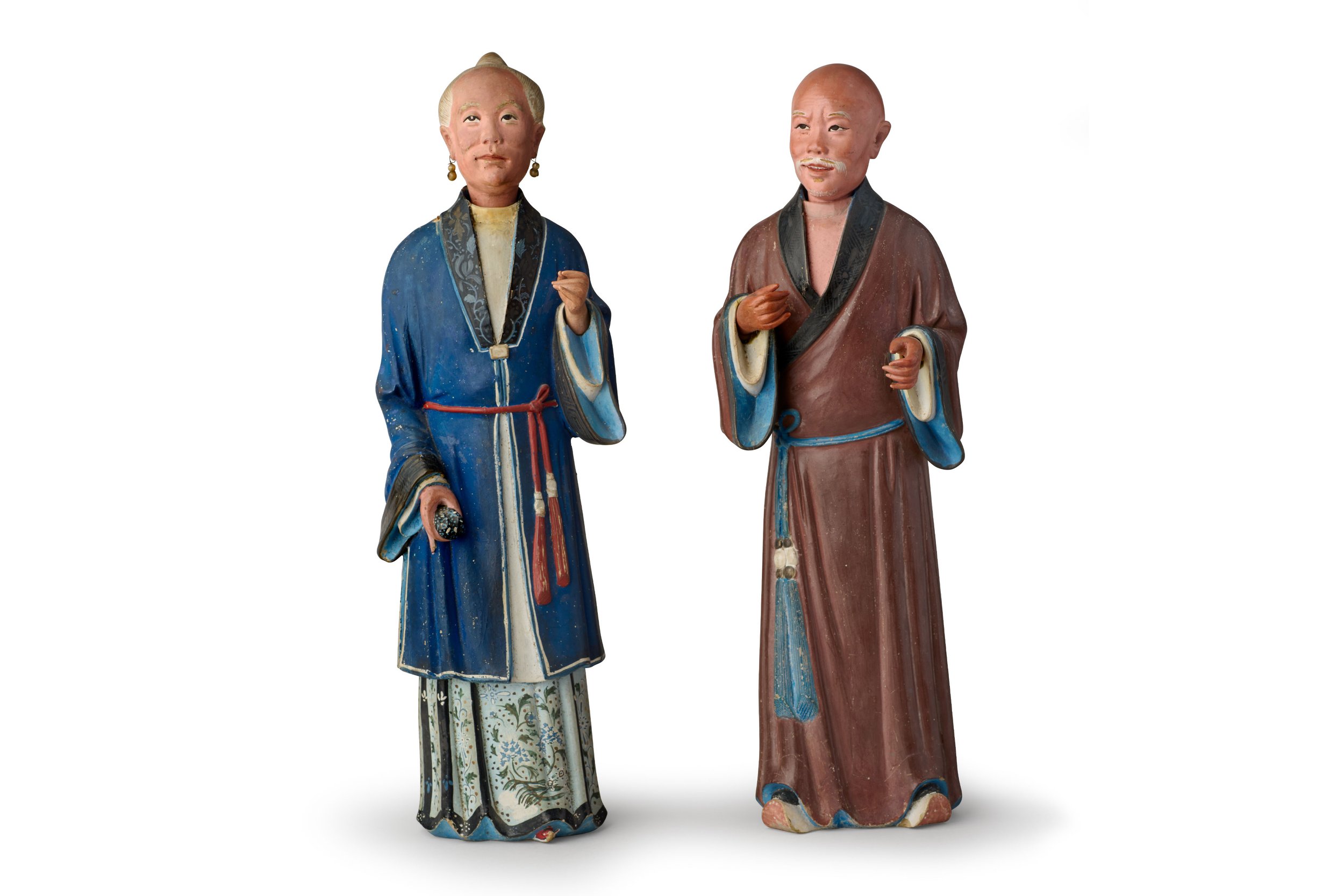
-
Unfired clay painted with polychrome enamels
China - Qing dynasty, Qianlong period (1736-1795)
Male H. 58 cm L. 31 cm W. 21 cm
Female H. 58 cm L. 29 cm W. 21 cm
Ref. 7955
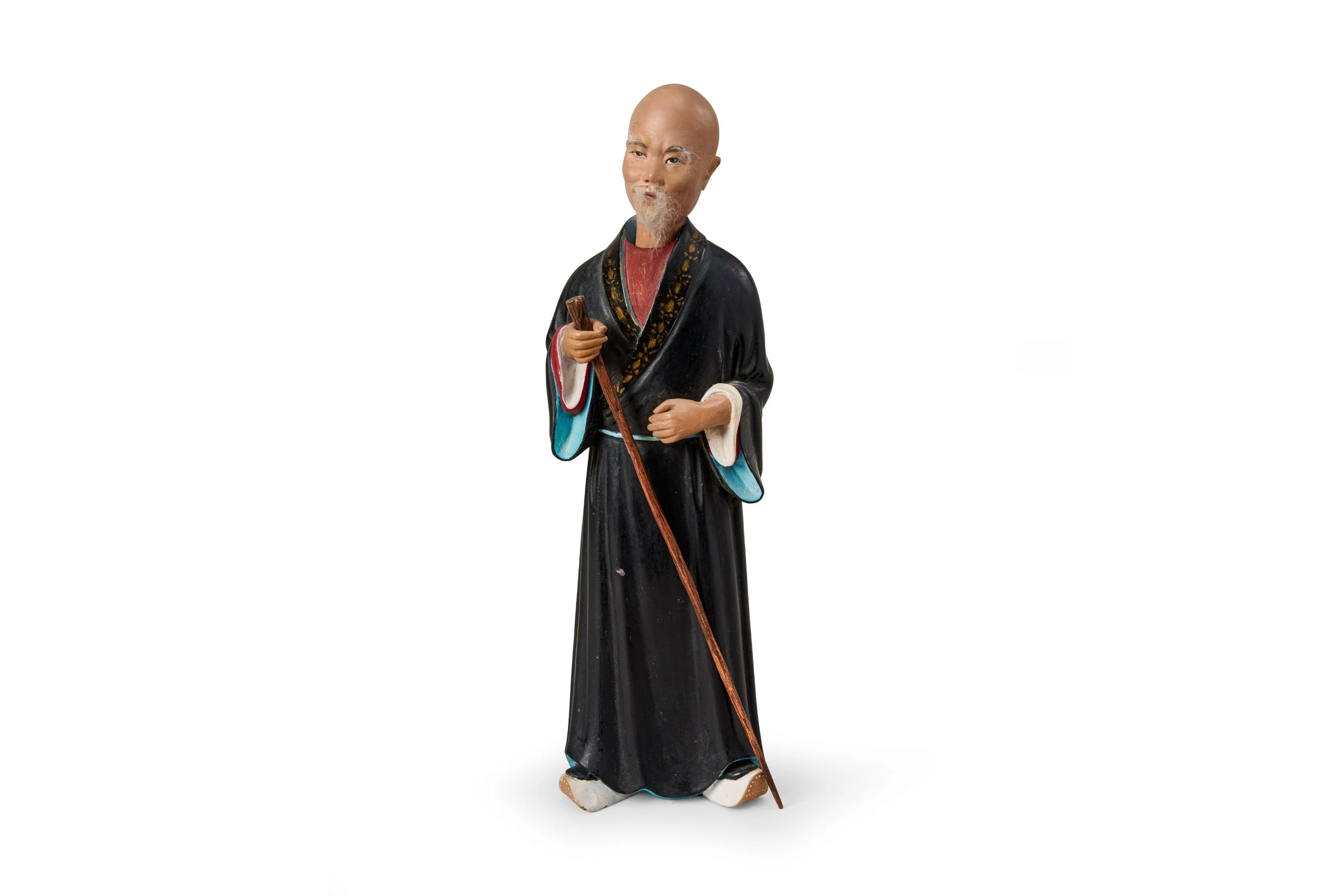
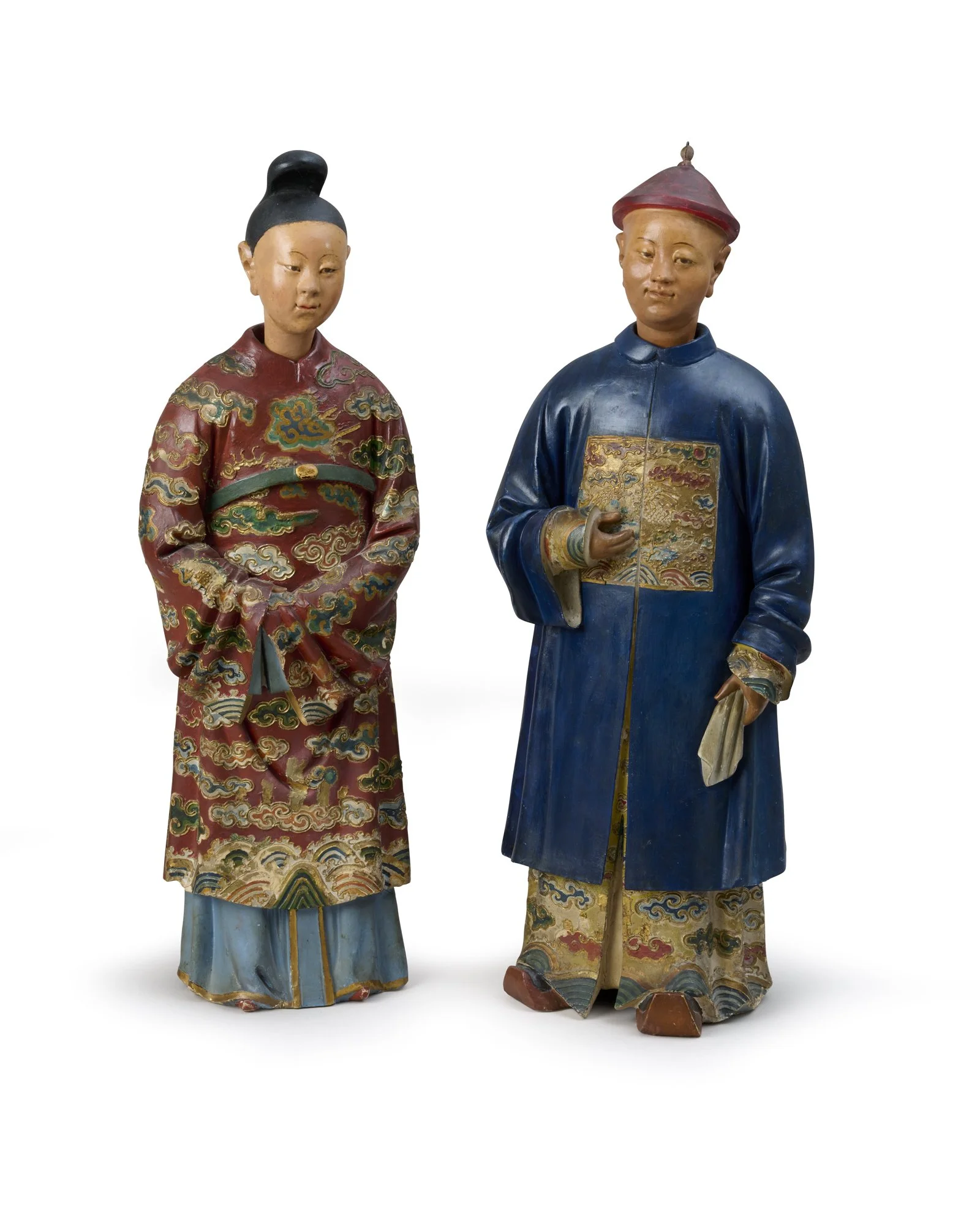
Figures such as the present examples are commonly known as ‘nodders’. Produced in Canton and exported to Europe and America throughout the eighteenth and nineteenth centuries, they became fashionable decorative objects for private interiors. Two nodding-head figures appear on the mantelpiece in Queen Charlotte’s dressing room at Windsor, as depicted by John Zoffany in 1764, attesting to their presence in elite settings. They were also acquired as souvenirs by European merchants and visitors to China; contemporary auction catalogues, such as the sale of Mr Morgan’s collection in 1772 and that of the estate of James West in 1773, record examples described as ‘shaking mandarin figures’ and ‘Chinese mandarins’. In some instances, Europeans commissioned portrait figures of themselves in this format, as evidenced by examples preserved in the Royal Danish Kunstkammer.
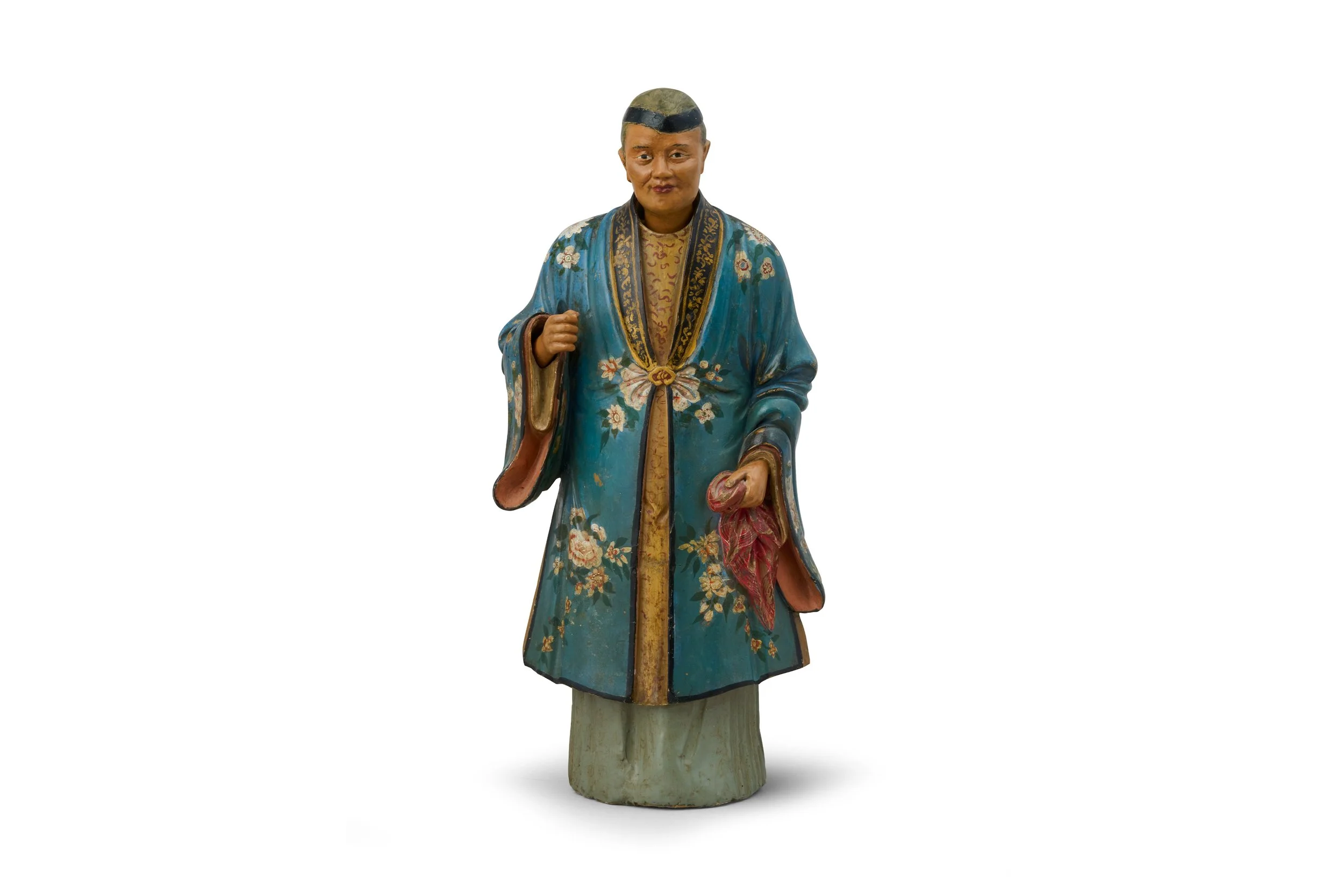
-
Unfired clay painted with polychrome enamels
China - Qing dynasty, Qianlong period (1736-1795)
H. 34 cm L. 15.5 cm W. 12 cm
Ref. 10496
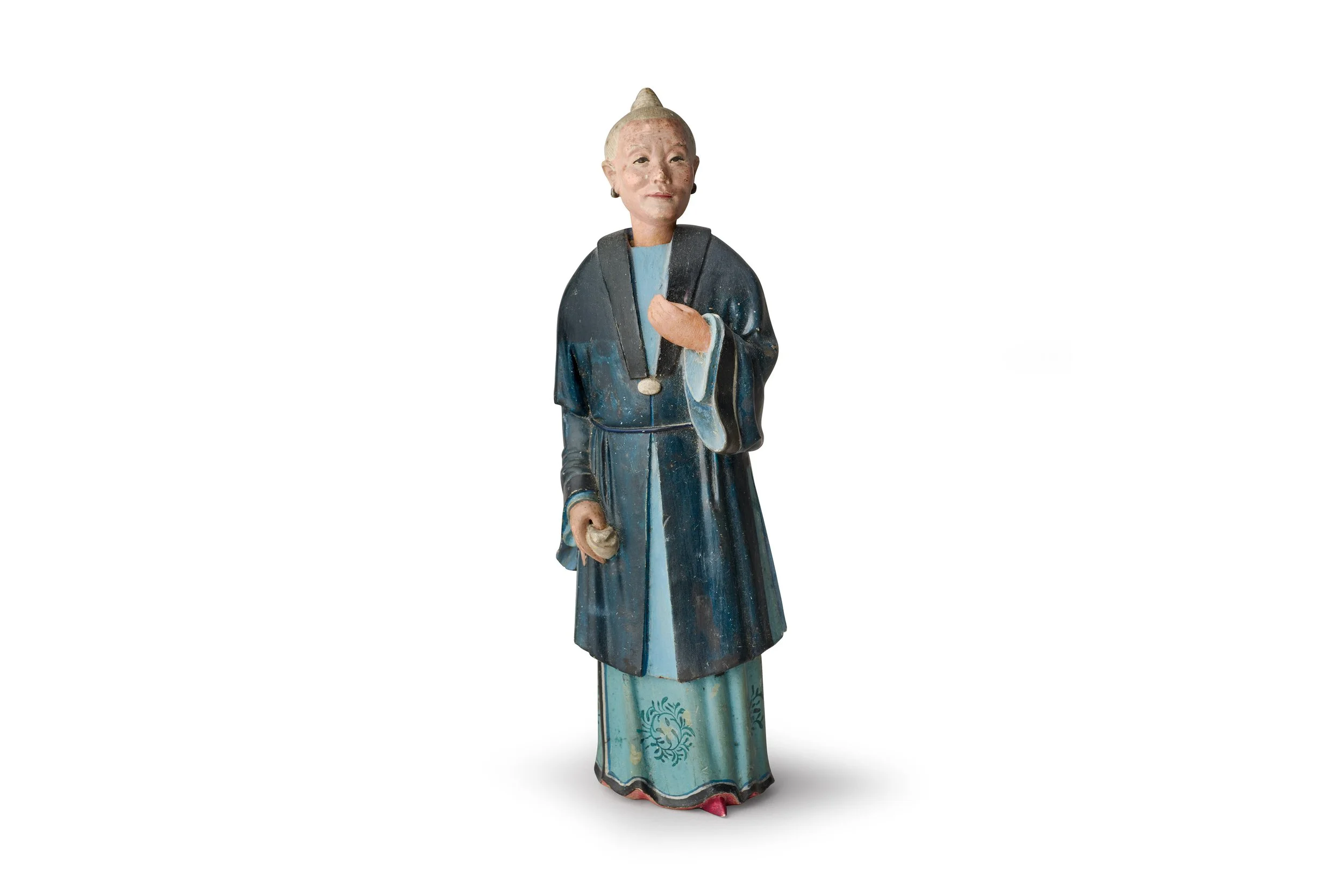
-
Unfired clay painted with polychrome enamels
China - Qing dynasty, Qianlong period (1736-1795)
H. 24 cm
Ref. 10602
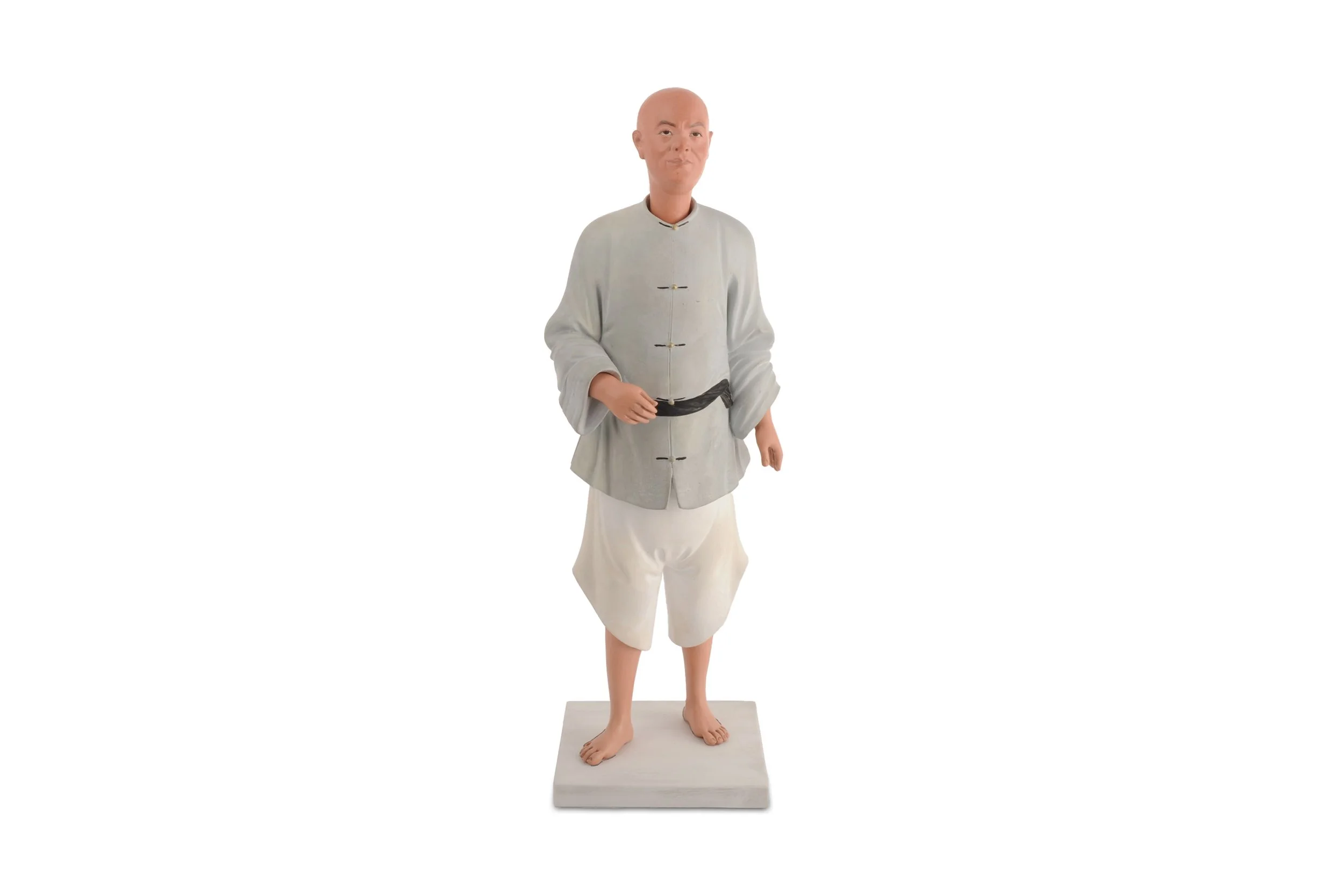
-
Unfired clay painted with polychrome enamels
China - Qing dynasty, Qianlong period (1736-1795)
H. 31
Ref. 10980
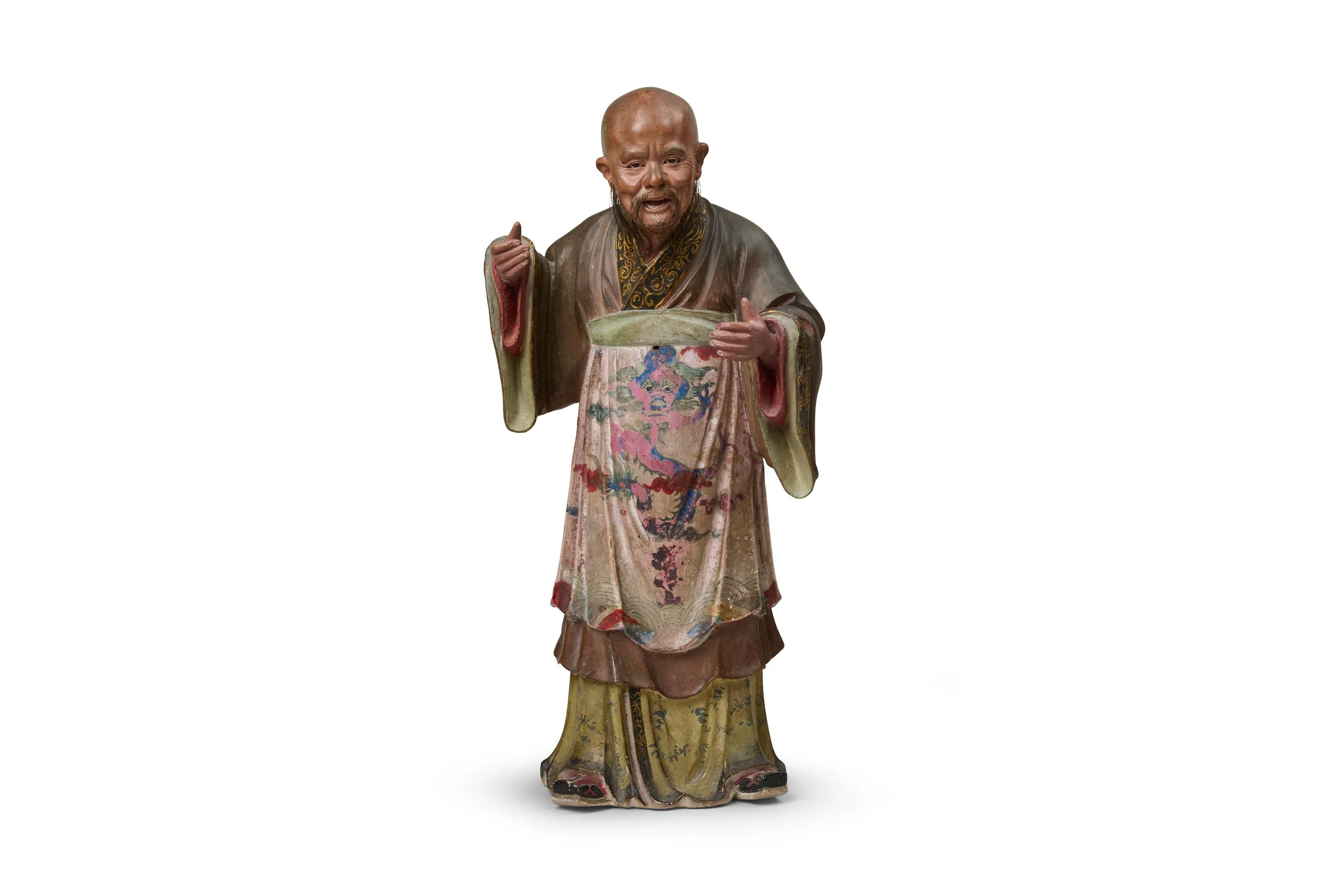
-
Unfired clay painted with water based gouache colours
China - Qing dynasty, Jianqing period (1796-1820), ca. 1800
H. 39.5 cm L. 14 cm W. 10 cm
Ref. 16839
-
Unfired clay painted with polychrome enamels
China - Qing dynasty, Qianlong period (1736-1795)
H. 31.5
Ref. 11453
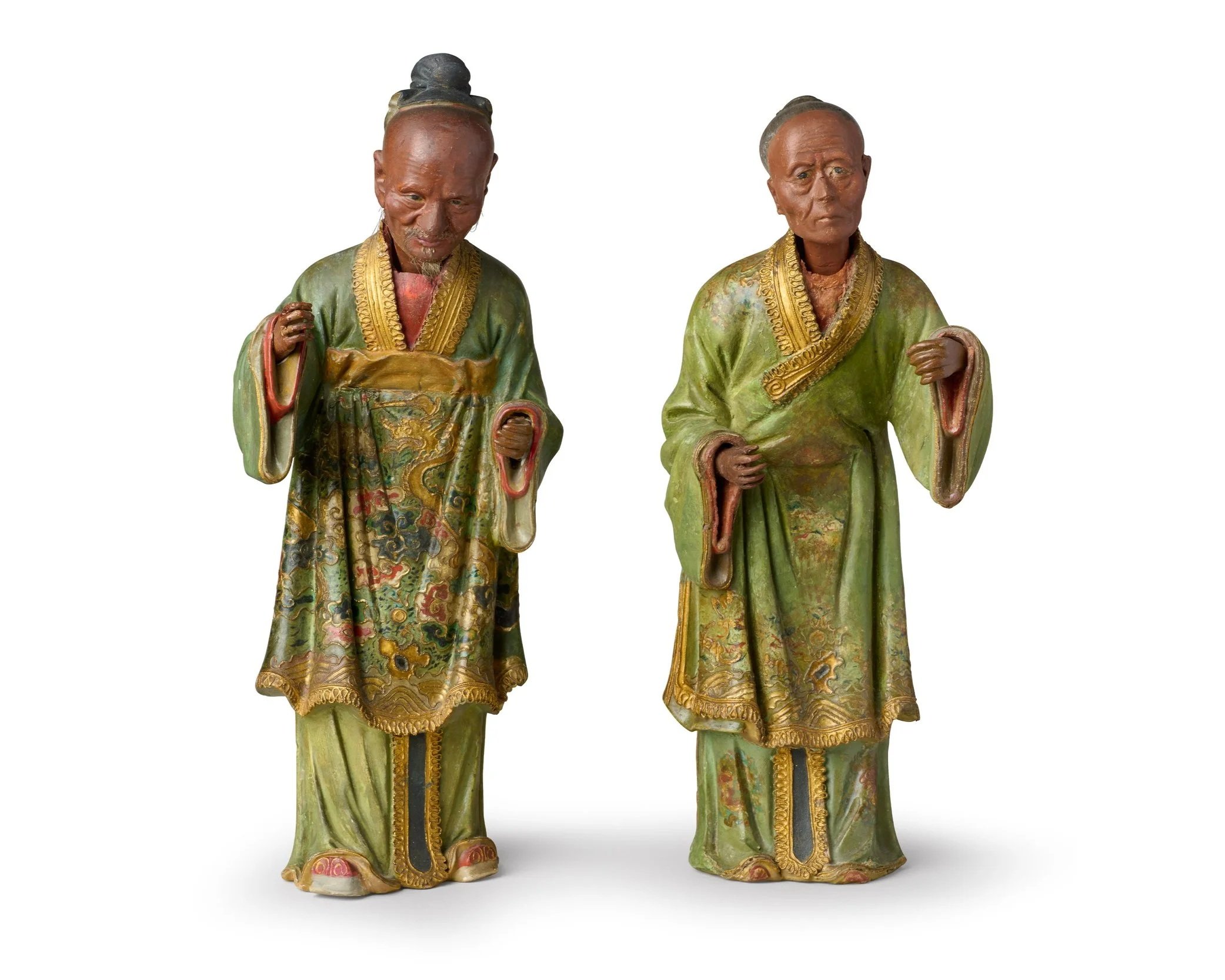
Chinese nodding-head figures represent a range of social types, from beggars to merchants and officials, each distinguished by costume that reflects Western curiosity about Chinese dress and society. Some retain human hair attachments and were dressed in embroidered silk robes, enhancing their lifelike effect. A group presented to the East India Marine Society in 1803 was described as having been ‘copied from the life and brought from Canton’, suggesting an intention to convey ethnographic realism. The gently articulated heads, which move with slight vibration, would have provided an engaging and novel feature within domestic interiors.
Significant collections survive in Europe and America. The largest group is at Drottningholm Palace, Stockholm, where one hundred figures were recorded in the 1777 inventory, fifty-three of which remain. A number were also acquired for the Prince Regent and installed in the Chinese-style interiors of the Brighton Pavilion in the early nineteenth century; several appear in drawings by John Nash from the 1820s. Other examples are preserved in the Östasiatiska Museet, Stockholm; the Peabody Essex Museum, Salem; and the Royal Danish Kunstkammer, which holds a group of figures representing members of the Imperial household. An exceptionally rare life-size example has also been recorded in a published private collection.
-
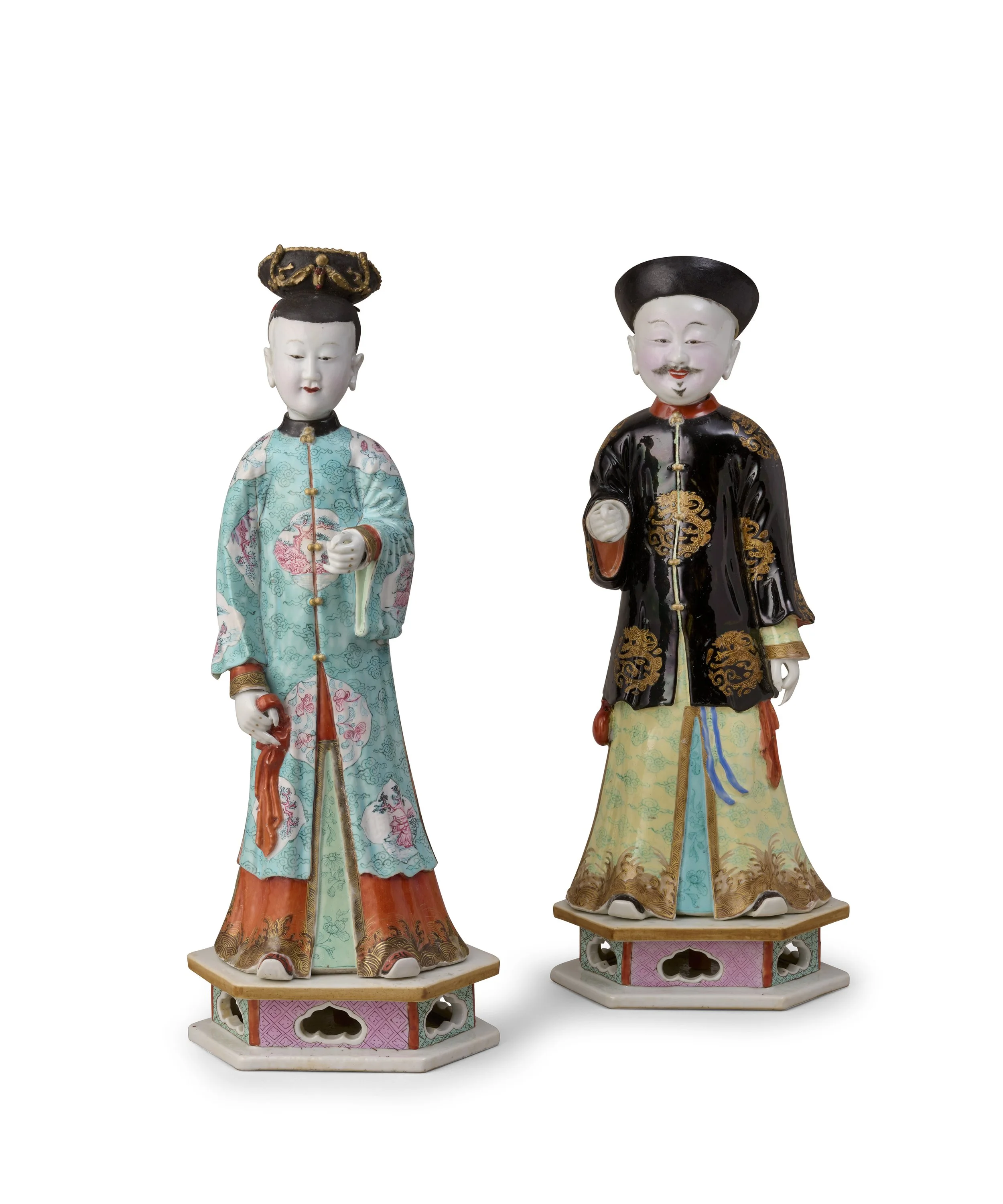
Porcelain decorated in overglaze famille rose enamels and gold
China - Qing dynasty, Qianlong period (1736-1795)
Male H. 46 cm L. 18.5 cm W. 12.5 cm
Female H. 46 cm L. 18.5 cm W. 12.5 cm (including porcelain bases)
Ref. 16419
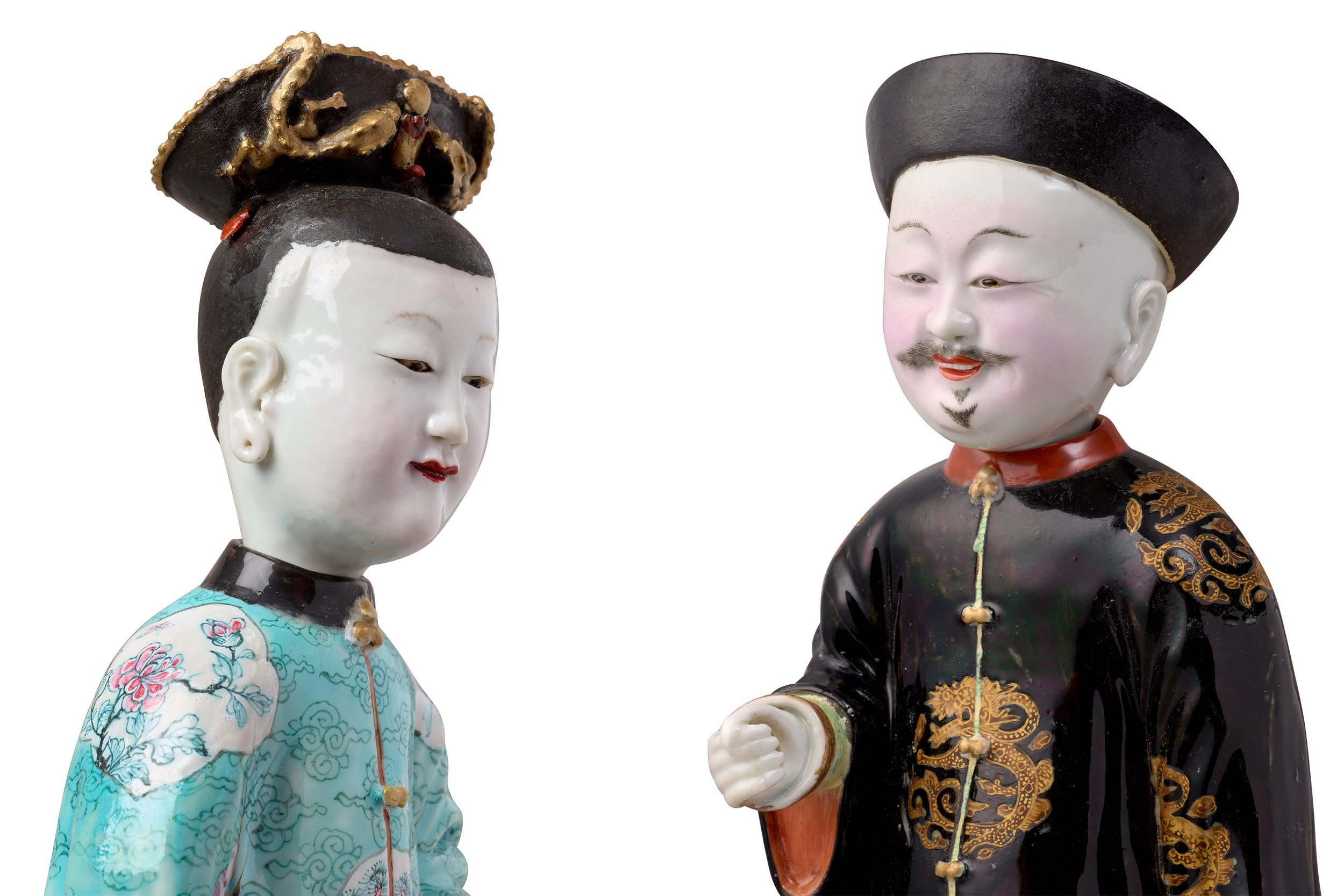
This pair of porcelain ‘nodding-head’ figures is extremely rare. Although porcelain figures of various dimensions and shapes were frequently made for the export market, it is very unusual to find porcelain figures in the form of ‘nodding-heads’. This device is more traditionally found on unfired clay models of Chinese people, produced in a variety of shapes and sizes, some with silk clothing and real-hair attachments, and representing a range of ages, occupations, and lifestyles.
Pair of Nodding-Head Figures
Unfired clay painted with water-based gouache colours
China - Qing dynasty, Qianlong period (1736-1795)
Male H. 32.7 cm L. 14 cm W. 13.5 cm
Female H. 31 cm L. 12.5 cm W. 14 cm
Provenance:
Collection of Axel Carlander (1869-1939), and thence by descent within the family
Ref. 14780
-
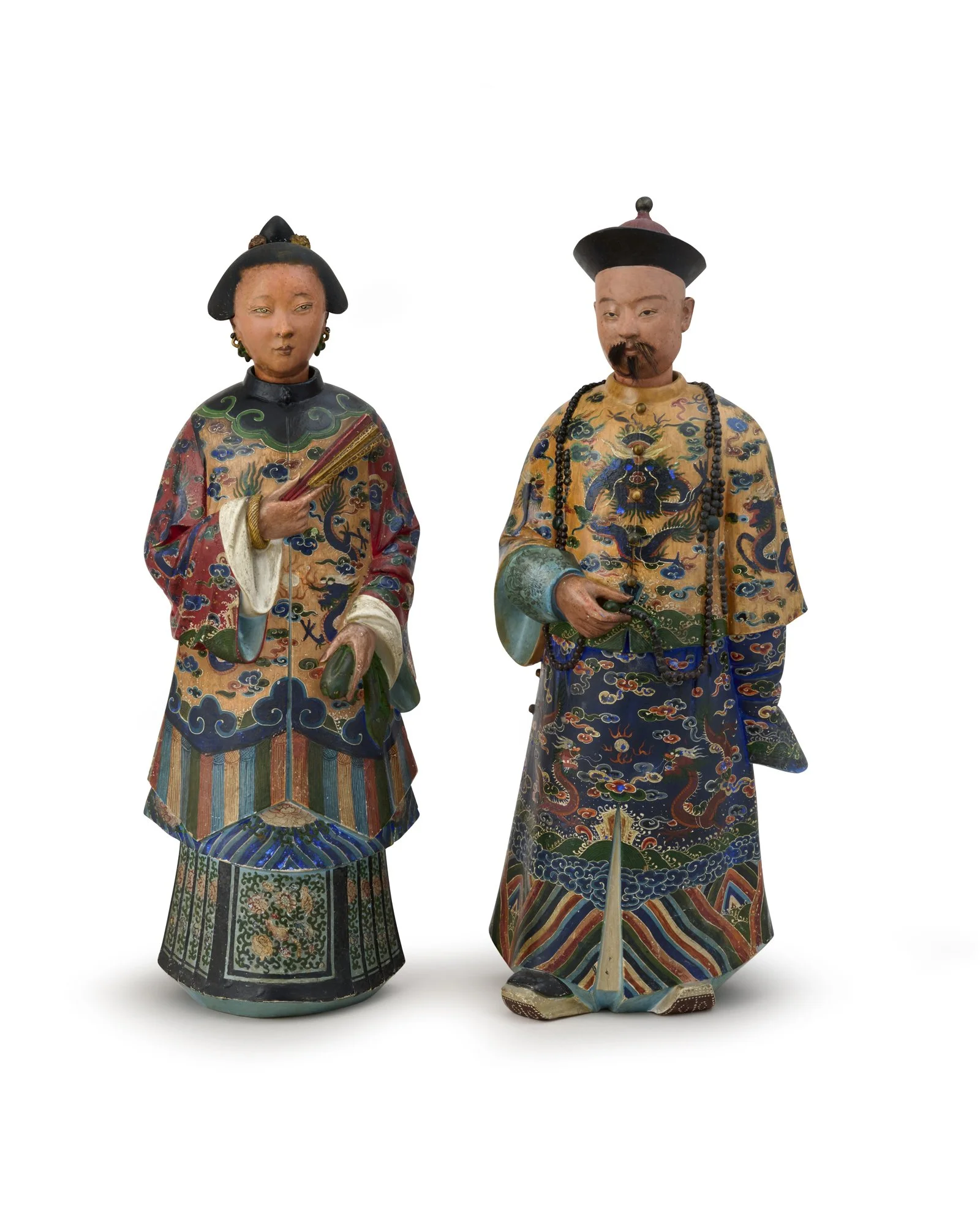
Unfired clay painted with polychrome enamels
China - Qing dynasty, Qianlong period (1736-1795)
Male H. 43.5 cm L.17 cm W. 13 cm
Female H. 42 cm L.15 cm W. 12 cm
Ref. 15158
-
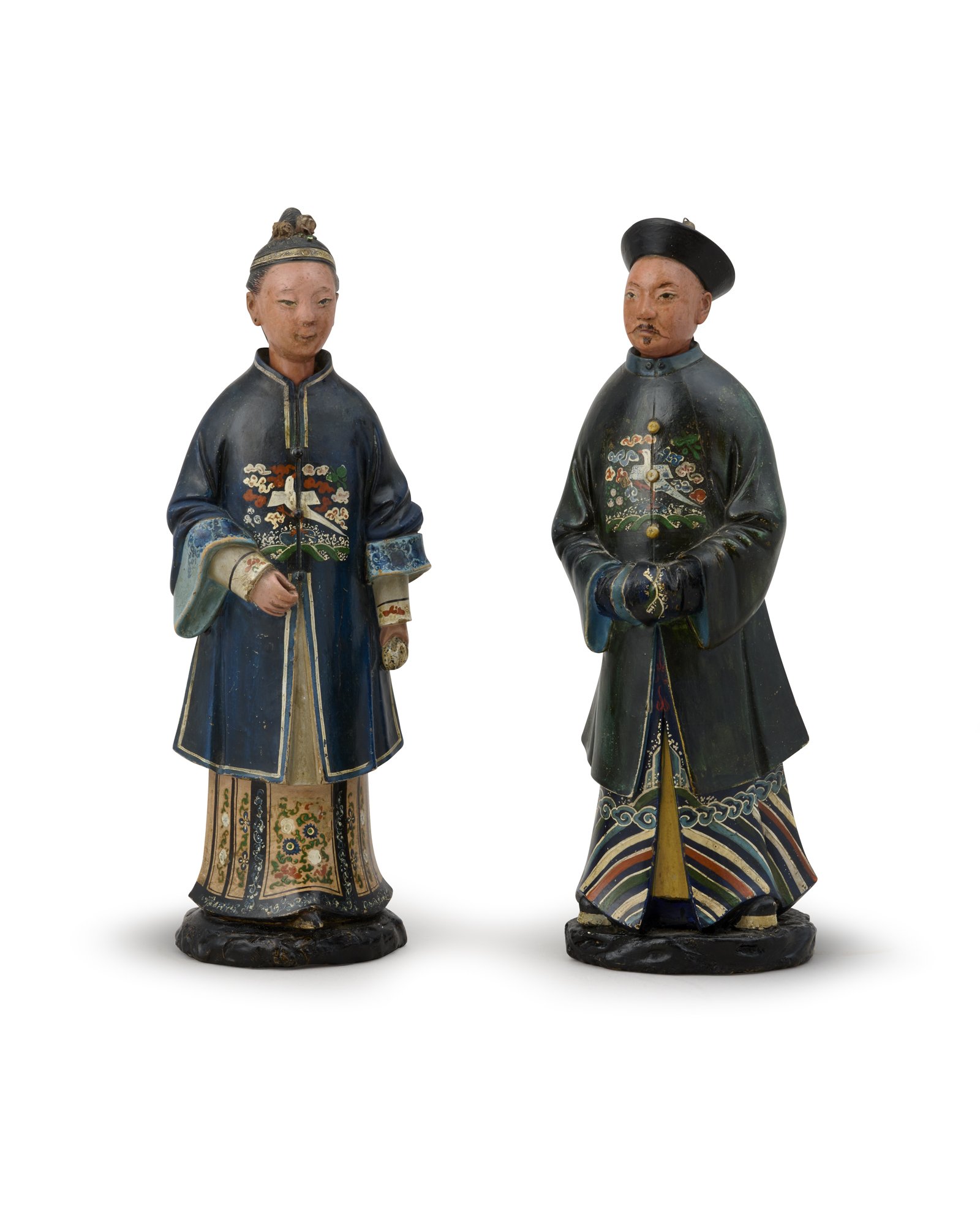
Unfired clay painted with polychrome enamels
China - Qing dynasty, Qianlong period (1736-1795)
Male H. 26.5 cm L. 9 cm W. 8 cm
Female H. 26.5 cm L. 9.5 cm W. 7 cm
Provenance:
Andrew Jerrold Perenchio (1930-2017) CollectionRef. 15142
-
Unfired clay painted with water-based gouache colours
China - Qing dynasty, Qianlong period (1736-1795)
Male H. 55 cm L. 21 cm W. 16.5 cm
Female H. 53.5 cm L. 18 cm W. 14 cm
Ref. 15343